Plantar Warts
A plantar wart can resemble a callus but may need different treatment. We can confirm the diagnosis and discuss options.
What is a plantar wart?
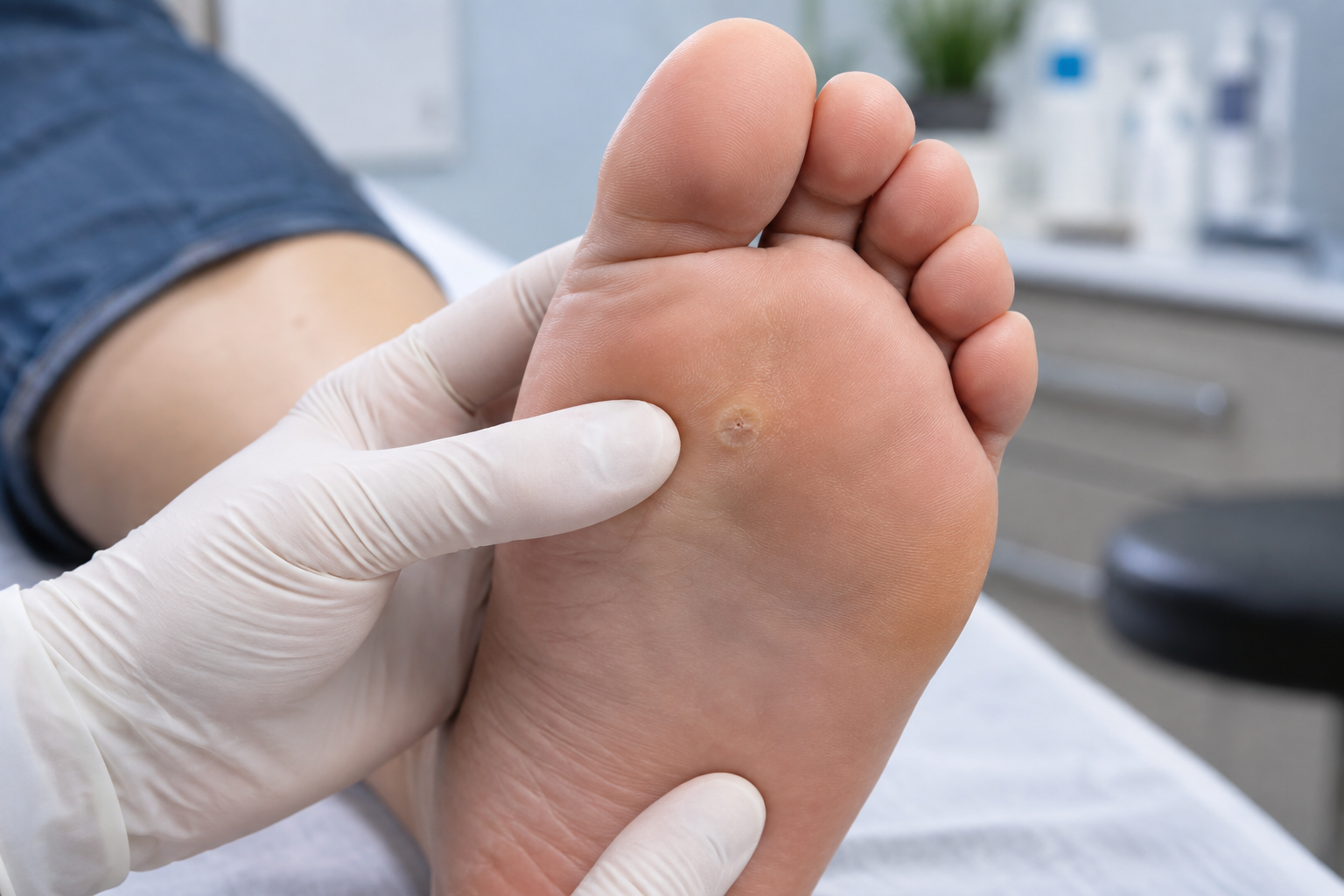
A plantar wart is a skin growth caused by certain types of human papillomavirus. It usually develops on the bottom of the foot. Pressure can push it inward beneath a layer of thick skin, making standing or walking uncomfortable.
Common symptoms
- A rough or grainy growth on the sole
- Small dark dots within the spot
- Pain when the area is squeezed from the sides
- Skin lines that stop at the edge of the lesion
- A cluster of several small growths
Corns, calluses, foreign bodies, and other skin lesions may look similar. A diagnosis matters before treatment.
Why it happens
The virus enters through tiny breaks in the skin. Barefoot exposure around moist shared areas may increase risk, but not everyone who is exposed develops a wart.
How we evaluate a possible plantar wart
We examine the skin pattern, location, tenderness, and nearby lesions. The top layer may be gently reduced to look for features of a wart. A biopsy is considered when a lesion is unusual or does not respond as expected.
Treatment options
The right option depends on size, number, location, age, health, and prior treatment. Options may include:
- Prescription topical treatment
- Careful removal of thick surface skin
- Freezing or other in office methods
- Swift microwave therapy for selected stubborn warts
- Surgical removal in limited cases
Warts can be persistent because treatment must clear infected skin while allowing healthy skin to recover.
When to schedule an appointment
Schedule care when a spot is painful, spreading, bleeding, or uncertain. People with diabetes, numbness, or poor circulation should avoid over the counter acid treatment without medical guidance.
Frequently asked questions
Is a plantar wart the same as a callus?
No. A wart is caused by a virus, while a callus develops from repeated pressure or friction.
Can I spread a wart to family members?
The virus can spread through direct contact or shared surfaces. Avoid picking the lesion and do not share files or pumice stones.
Why do warts come back?
The virus may remain in nearby skin even after the visible growth improves. Recurrence does not always mean treatment was performed incorrectly.
How to prepare for your appointment
Bring a list or photo of products you have tried and note when the skin change began. Avoid trimming, scraping, or applying a new medicated product immediately before the visit when possible.
Related care
You may also want to explore foot skin and nail care, plantar warts, and corns and calluses.
Foot and ankle care close to home
Signature Foot and Ankle provides personalized care at our Boynton Beach and Loxahatchee offices. Call 561 203 9285 or request an appointment online.