Ingrown Toenails
An ingrown toenail can become painful or infected. In office treatment can address the painful nail edge.
What is an ingrown toenail?
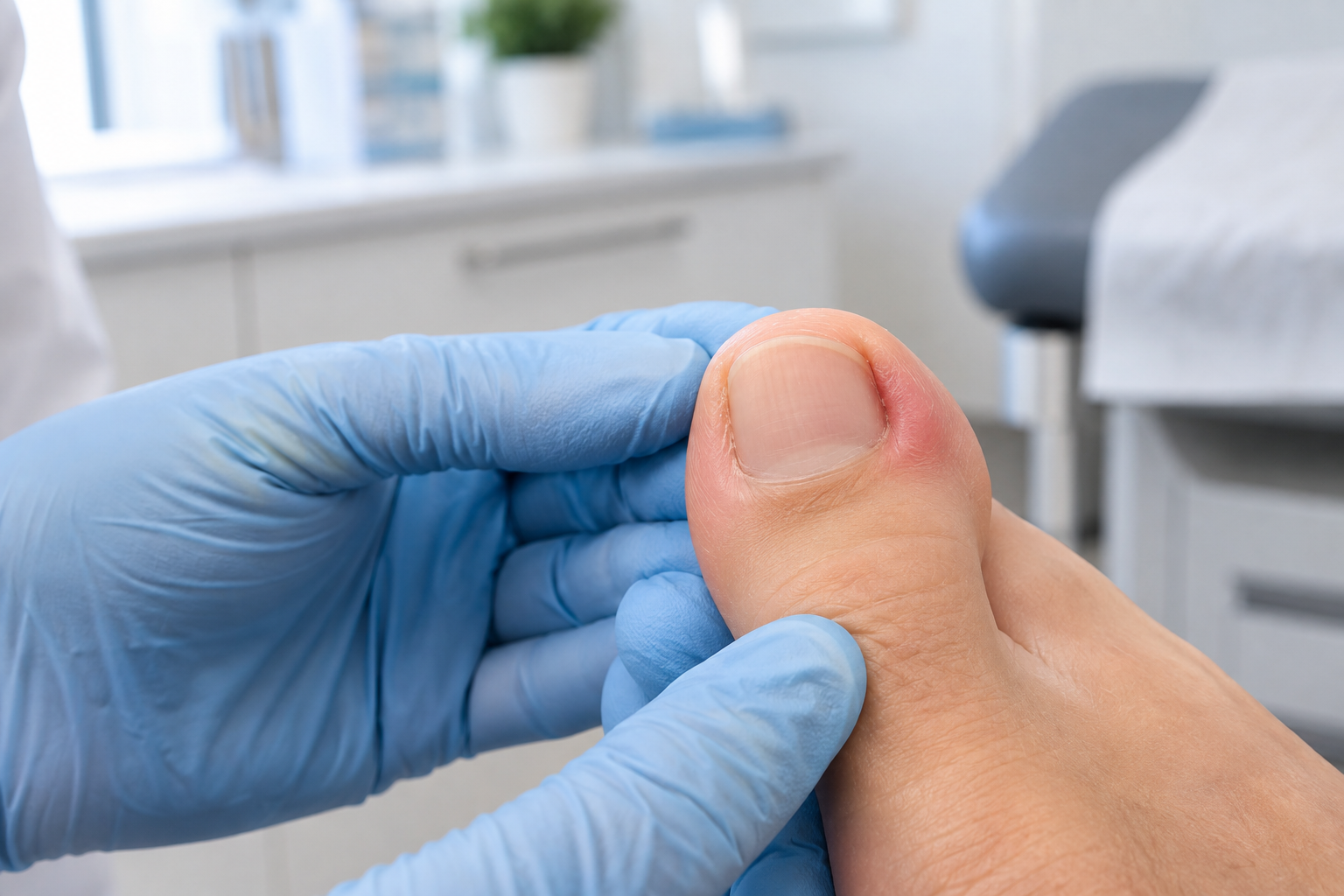
An ingrown toenail occurs when the side of the nail presses or grows into the nearby skin. The big toe is affected most often. Redness and tenderness can progress to drainage or infection when the skin breaks.
Common symptoms
- Pain along one or both sides of a toenail
- Redness, swelling, or warmth
- Tender skin that overlaps the nail edge
- Drainage or an odor when infection is present
People with diabetes, numbness, poor circulation, or a weakened immune system should not attempt home nail surgery.
Why it happens
Nails cut too short or rounded at the corners, tight shoes, repeated toe pressure, injury, curved nail shape, and fungal thickening can contribute.
How we evaluate an ingrown toenail
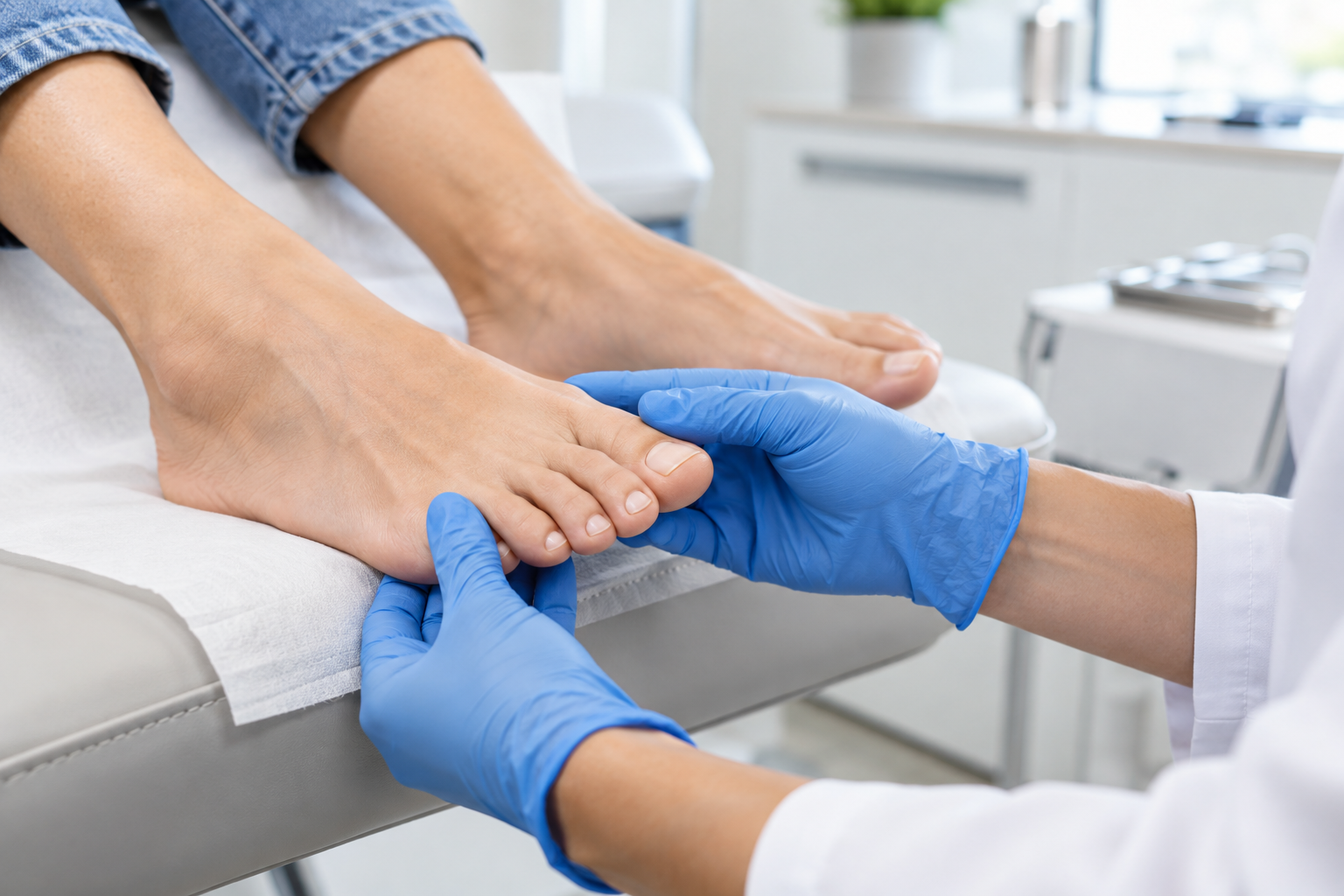
The toe is examined for the location of the nail edge, infection, and excess tissue. We also consider circulation, sensation, health conditions, and whether the problem keeps returning.
Treatment options
Treatment depends on the stage and the patient's health. Options may include:
- Guidance on safe nail and shoe care
- Treatment of infection when present
- Removal of the painful nail border after local numbing
- A procedure to reduce regrowth of a repeatedly ingrown border
- Onyfix nail correction for selected curved nails
Cutting deeply into the corner often leaves a sharp nail piece and can make the problem worse.
When to schedule an appointment
Arrange care when pain is increasing, drainage is present, or the nail keeps becoming ingrown. Seek prompt care for spreading redness, fever, or a toe that is rapidly worsening.
Frequently asked questions
Will the procedure hurt?
The toe is numbed with local anesthetic before the nail edge is treated. We explain aftercare before you leave.
Will the whole nail be removed?
Often only the painful side is treated. The best option depends on the shape of the nail and whether the problem is recurring.
Can an ingrown nail come back?
It can. For recurrent cases, a procedure that treats the growth area of the painful border may lower the chance of regrowth.
How to prepare for your appointment
Remove nail polish when possible and bring a list of products or medications you have tried. Tell us about shoe pressure, prior nail injuries, diabetes, circulation problems, and any drainage or skin changes.
Related care
You may also want to explore toenail fungus, ingrown toenails, and medical pedicures.
Foot and ankle care close to home
Signature Foot and Ankle provides personalized care at our Boynton Beach and Loxahatchee offices. Call 561 203 9285 or request an appointment online.