Cracked Heels
Dry heel skin can split and become painful. Deeper cracks may increase the risk of infection.
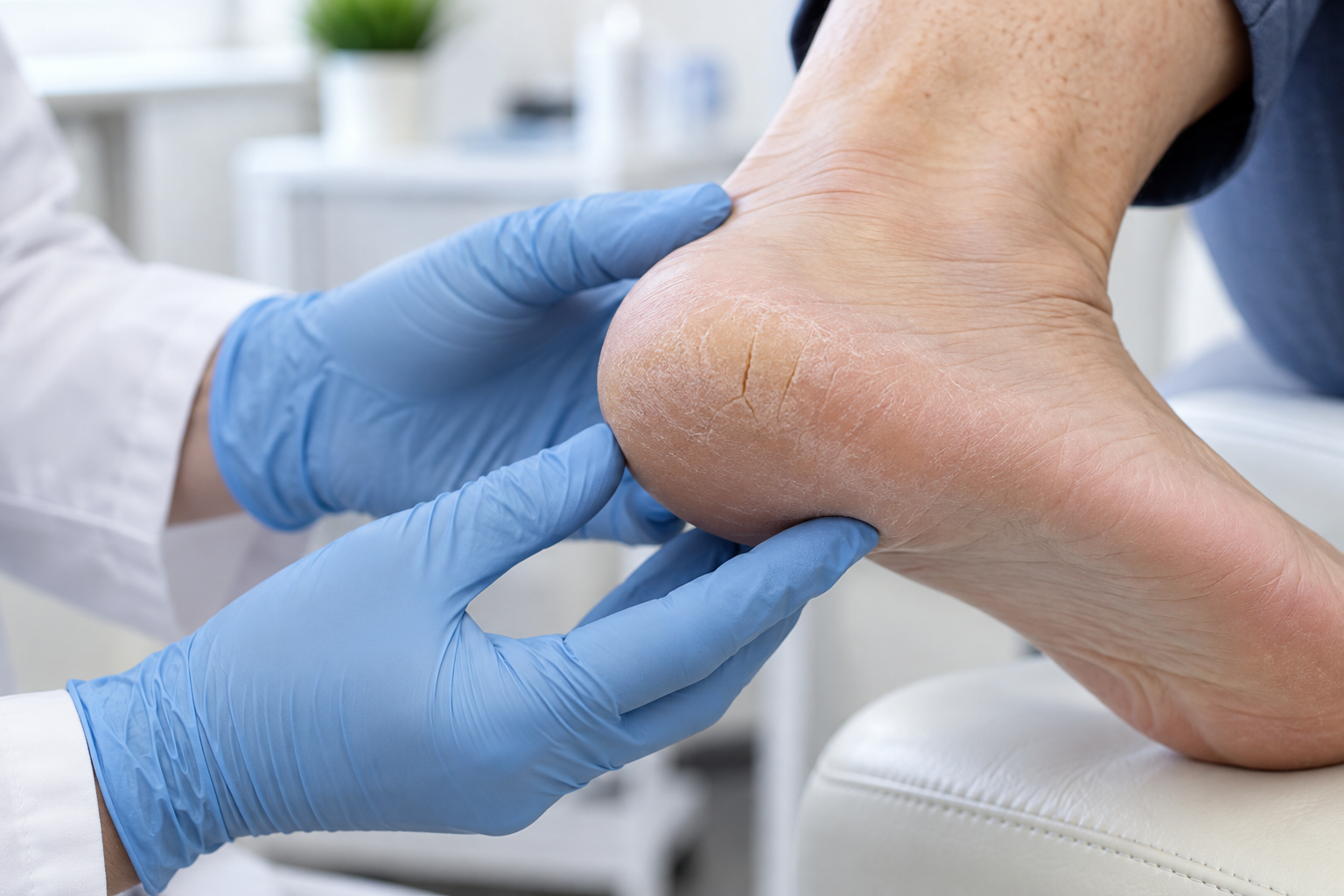
What is cracked heels?
Cracked heels, also called heel fissures, develop when dry, thick skin around the heel loses flexibility and splits under pressure. Small surface lines may be cosmetic, while deeper cracks can hurt, bleed, or become infected.
Common symptoms
- Dry or flaky skin around the heel
- Thick skin or a hard rim at the heel edge
- Pain when standing
- Visible splits that may bleed
- Redness or drainage when infection develops
Skin fungus, eczema, psoriasis, diabetes, thyroid problems, and poor circulation may contribute to ongoing cracking.
Why it happens
Open backed shoes, barefoot walking, dry weather, prolonged standing, extra heel pressure, and harsh skin products can make the skin less flexible.
How we evaluate heel cracks
We examine the depth of the cracks, surrounding skin, pressure pattern, and signs of infection. We may also check circulation and sensation and consider whether a skin or medical condition is contributing.
Treatment options
Care may include:
- Professional reduction of thick skin
- Prescription strength moisturizers or keratolytic products
- Protective heel cups or appropriate shoes
- Treatment for fungus or inflammation when present
- Wound care for deeper fissures
- Offloading when pressure delays healing
Moisturizer should not be placed between the toes unless directed, because excess moisture there can encourage fungus.
When to schedule an appointment
Schedule care for painful, deep, bleeding, or recurring cracks. People with diabetes or poor circulation should seek early evaluation rather than treating an open fissure alone.
Frequently asked questions
Why does lotion not fix the problem?
A basic lotion may not penetrate very thick skin, and continued pressure can reopen the area. A stronger product and pressure control may be needed.
Can cracked heels become infected?
Yes. A deep crack is an opening in the skin and can allow bacteria to enter.
Are open backed shoes a problem?
They may allow the heel to spread and dry out, which can worsen cracking in some people.
How to prepare for your appointment
Bring a list or photo of products you have tried and note when the skin change began. Avoid trimming, scraping, or applying a new medicated product immediately before the visit when possible.
Related care
You may also want to explore foot skin and nail care, plantar warts, and corns and calluses.
Foot and ankle care close to home
Signature Foot and Ankle provides personalized care at our Boynton Beach and Loxahatchee offices. Call 561 203 9285 or request an appointment online.