Fungal nail laser may be considered as one part of treatment after the cause of nail changes has been evaluated.
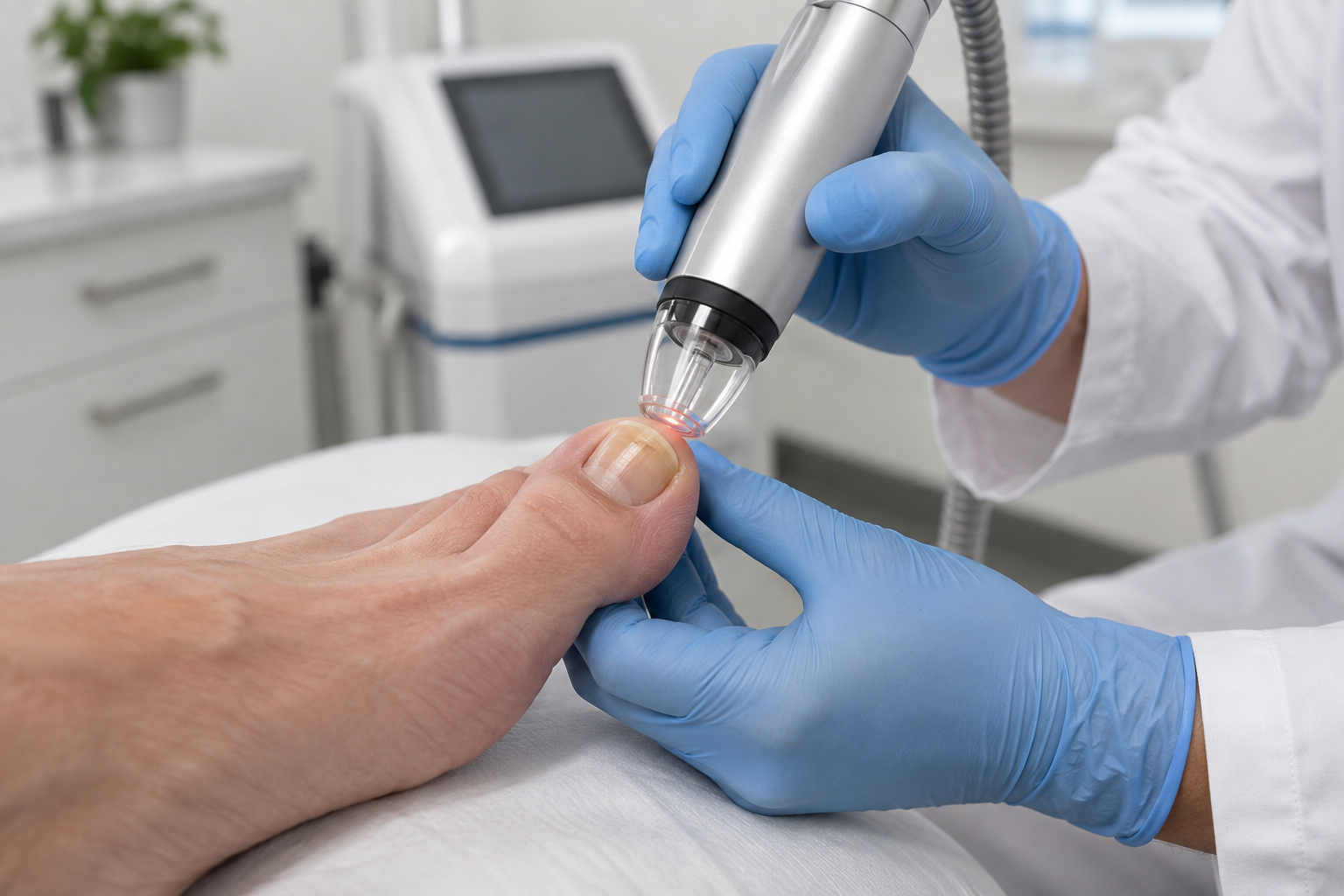
Laser treatment directs controlled light energy through the nail. It may be considered for selected patients with a confirmed or strongly suspected fungal nail infection. It does not remove the damaged nail immediately, and visible improvement depends on new nail growth.
Trauma, shoe pressure, psoriasis, aging changes, and other nail disorders can look like fungus. A clinical examination and, when appropriate, fungal testing can help avoid treating the wrong problem.
Laser may be discussed when topical treatment has been difficult, oral medication is not preferred or appropriate, or a combined plan is recommended. The choice depends on the number of nails involved, nail thickness, health history, medication safety, cost, and treatment goals.
The nail may be thinned before treatment so energy can reach the nail more evenly. The laser is passed over the nail and nearby area according to the treatment protocol. Most patients return to normal daily activity after the visit, but individual instructions may vary.
Toenails grow slowly. Clearer nail can only become visible as new nail grows from the base. Laser treatment cannot guarantee clearance or prevent recurrence. Shoe hygiene, moisture control, and treatment of athlete's foot may be important parts of the plan.
Learn about toenail fungus, athlete's foot, and KeryFlex nail restoration.
No. The diagnosis, health history, previous care, treatment goals, and possible risks all affect whether this option should be considered.
The schedule depends on the treatment and how the condition responds. You will receive a plan for follow up rather than a guaranteed number of visits.
The diagnosis and plan should be reassessed. Another treatment, additional testing, a period of protection, or a specialist discussion may be appropriate.
Signature Foot and Ankle provides care in Boynton Beach and Loxahatchee. Call 561 203 9285 or request an appointment online.