Fractures & Trauma
Fractures and traumatic injuries need timely assessment of alignment, stability, skin, circulation, and the ability to bear weight.
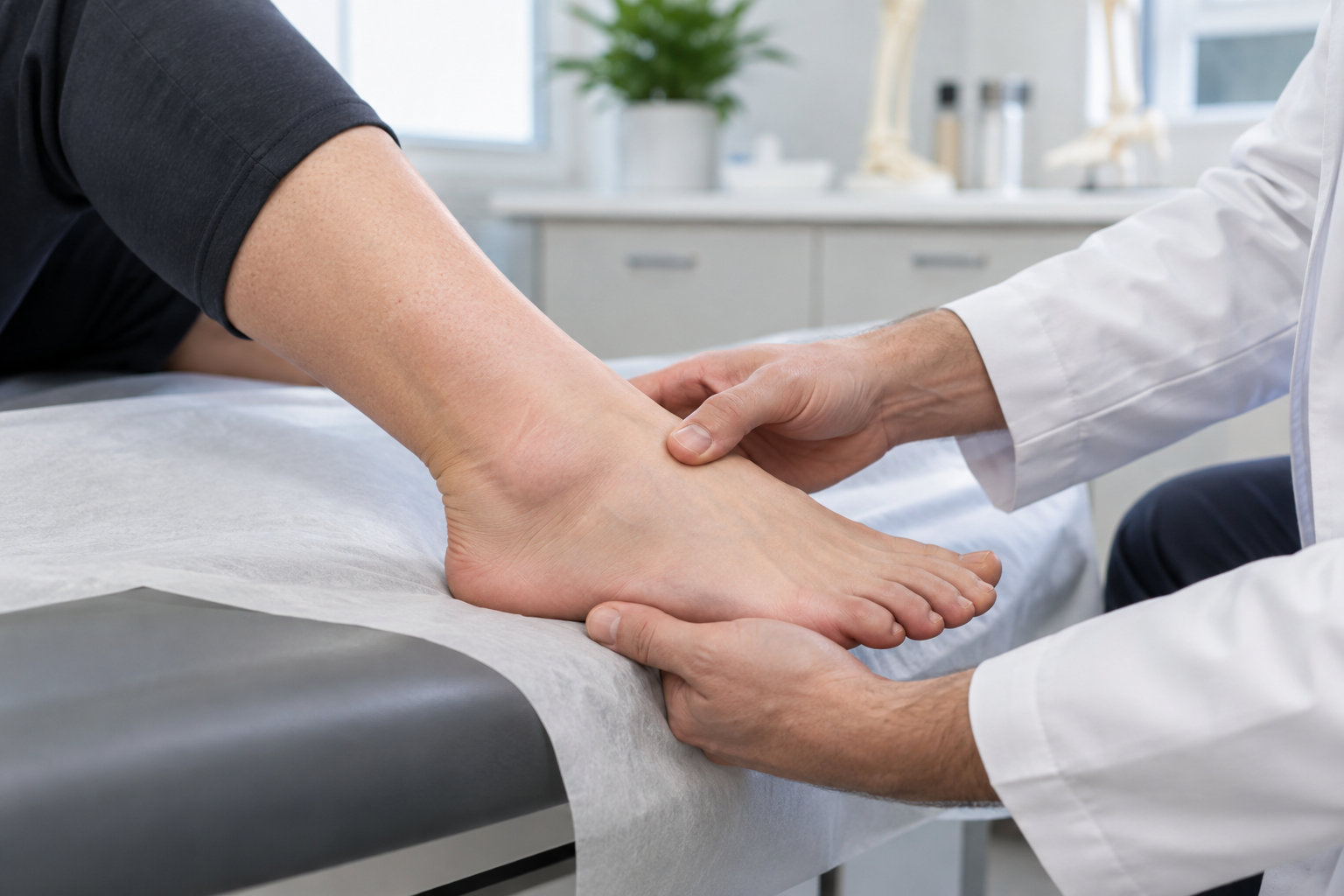
Could my foot or ankle be broken?
A fracture may follow a twist, fall, direct impact, crush injury, sports injury, or repetitive overload. Pain, swelling, bruising, point tenderness, deformity, and difficulty bearing weight are common, but some fractures can still allow limited walking.
Common injuries we evaluate
- Ankle fractures
- Metatarsal and fifth metatarsal fractures
- Toe fractures
- Heel and midfoot injuries
- Stress fractures
- Fracture dislocations and crush injuries
What happens at the first visit?
We check the skin, circulation, sensation, alignment, swelling, and exact areas of tenderness. In-office digital X-rays can identify many fractures. CT, MRI, or repeat imaging may be needed for complex injuries, subtle stress injuries, or surgical planning.
How are fractures treated?
Treatment depends on the bone, fracture pattern, alignment, joint involvement, stability, and health factors that affect healing. Care may include:
- A surgical shoe, cast, brace, or walking boot
- Protected or nonweight bearing
- Swelling control and pain management
- Close follow up with repeat imaging
- Surgical evaluation for displaced, unstable, open, or higher risk fractures
When is urgent care needed?
Seek urgent assessment for an open wound over a possible fracture, obvious deformity, severe swelling, uncontrolled pain, loss of sensation, or a foot that becomes cold, pale, or blue. Do not attempt to straighten a deformed foot or ankle yourself.
What affects healing?
Smoking, diabetes, poor circulation, nutrition, bone health, and following weight bearing restrictions can affect recovery. Return to work and sports depends on the specific injury and evidence of healing, not a fixed timeline.
Related care
Learn about braces and walking boots and stress fractures.
Frequently asked questions
Will I need an X-ray or another test?
Testing depends on the examination and the suspected cause. Imaging is recommended when it can answer a specific question or change the treatment plan.
Can I continue my normal activity?
Activity guidance depends on pain, stability, strength, and the risk of making the problem worse. The clinician will explain what is safe to continue and what should be modified.
When should I schedule an appointment?
Schedule when symptoms persist, return repeatedly, limit walking or exercise, or cause concern about a new injury or change in the foot.
Schedule a foot and ankle visit
Signature Foot and Ankle provides care in Boynton Beach and Loxahatchee. Call 561 203 9285 or request an appointment online.