High Arches
High arches can concentrate pressure under the heel and ball of the foot and may contribute to ankle instability.
What is high arches?
A high arched foot places more weight on the heel and ball of the foot. Some high arches are flexible and painless. Others are rigid, unstable, or connected to an underlying nerve or muscle condition.
Common symptoms
- Pain under the heel or ball of the foot
- Calluses in high pressure areas
- Clawing or bending of the toes
- Frequent ankle rolling
- Difficulty fitting shoes comfortably
A high arch that is getting worse, affects only one foot, or comes with weakness should be evaluated carefully.
Why it happens
High arches may be inherited or may develop with a neurologic or muscle condition. The foot may not absorb shock evenly, which increases pressure in specific areas.
How we evaluate a high arched foot
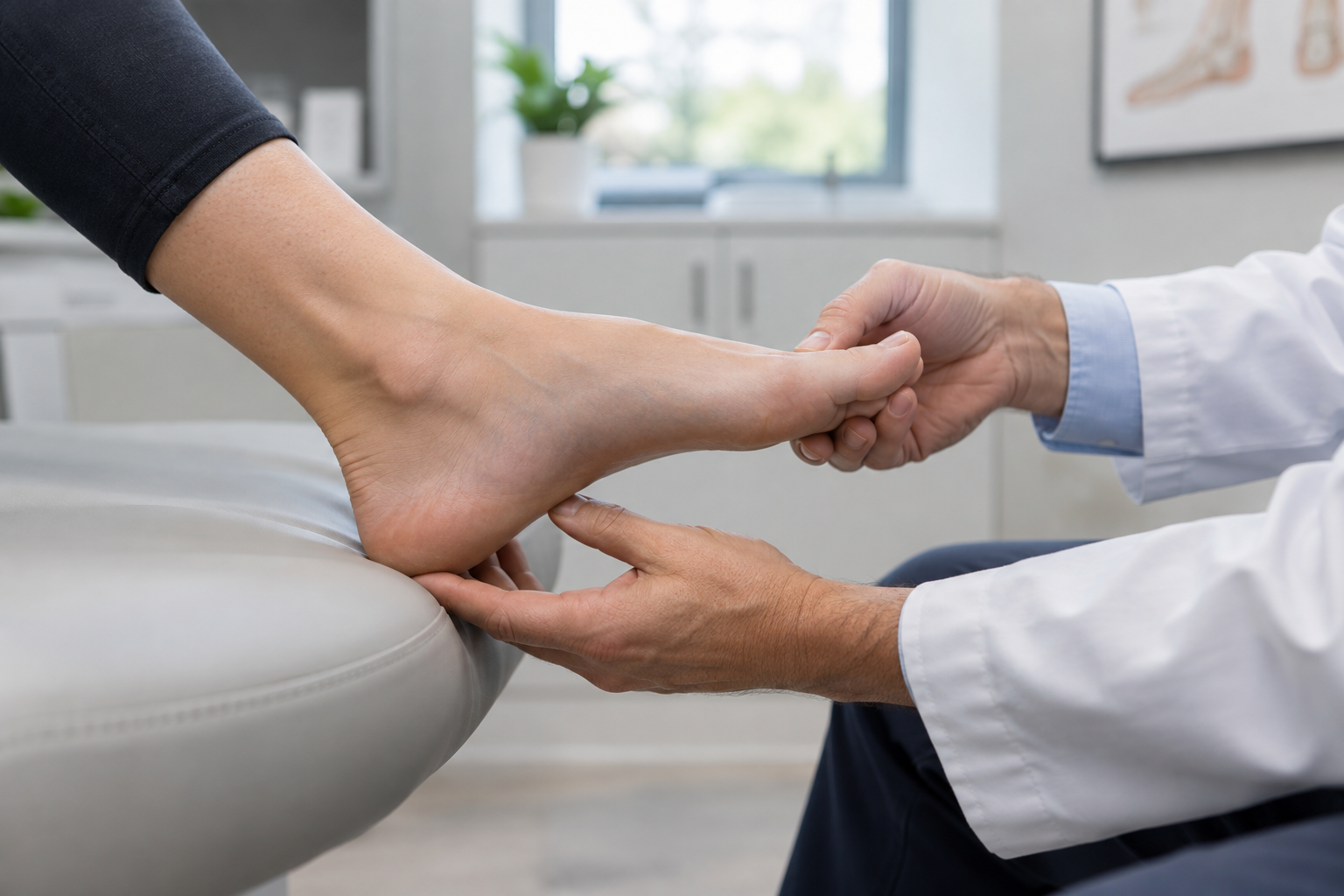
We assess arch flexibility, muscle strength, balance, sensation, callus pattern, and ankle stability. Weight bearing X-rays can show the structure. Additional testing may be recommended when nerve or muscle changes are suspected.
Treatment options
Care focuses on cushioning pressure and improving stability. It may include:
- Shoes with cushioning and appropriate depth
- Custom orthotics designed for a high arch
- An ankle brace when instability is present
- Padding for painful pressure areas
- Stretching and physical therapy
- Surgery for a severe, progressive, or rigid deformity
The goal is not simply to flatten the arch. Support must be shaped to the way the foot loads and moves.
When to schedule an appointment
Schedule care if high arches are causing pain, repeated ankle sprains, numbness, or progressive toe changes.
Frequently asked questions
Are high arches always a problem?
No. Many people have high arches without pain. Treatment is based on symptoms and function.
Can store bought inserts help?
Some provide useful cushioning, but a poorly matched insert can add pressure. An evaluation can clarify what type of support is appropriate.
Why would nerve testing be needed?
Certain neurologic conditions can cause progressive high arches, weakness, or balance changes. Testing is considered when the history or exam raises concern.
How to prepare for your appointment
Bring the shoes that cause the most trouble and any inserts or braces you use. Be ready to describe which activities are limited and whether the shape or pain has changed over time.
Related care
You may also want to explore custom orthotics, foot deformities, and ball of foot pain.
Foot and ankle care close to home
Signature Foot and Ankle provides personalized care at our Boynton Beach and Loxahatchee offices. Call 561 203 9285 or request an appointment online.