
November 6, 2026
A High Ankle Sprain: What Miami Hurricanes Star Malachi Toney's Injury Teaches Us
Dr. Kane explains high ankle sprains, treatment options, TightRope fixation, and why a careful comeback matters.
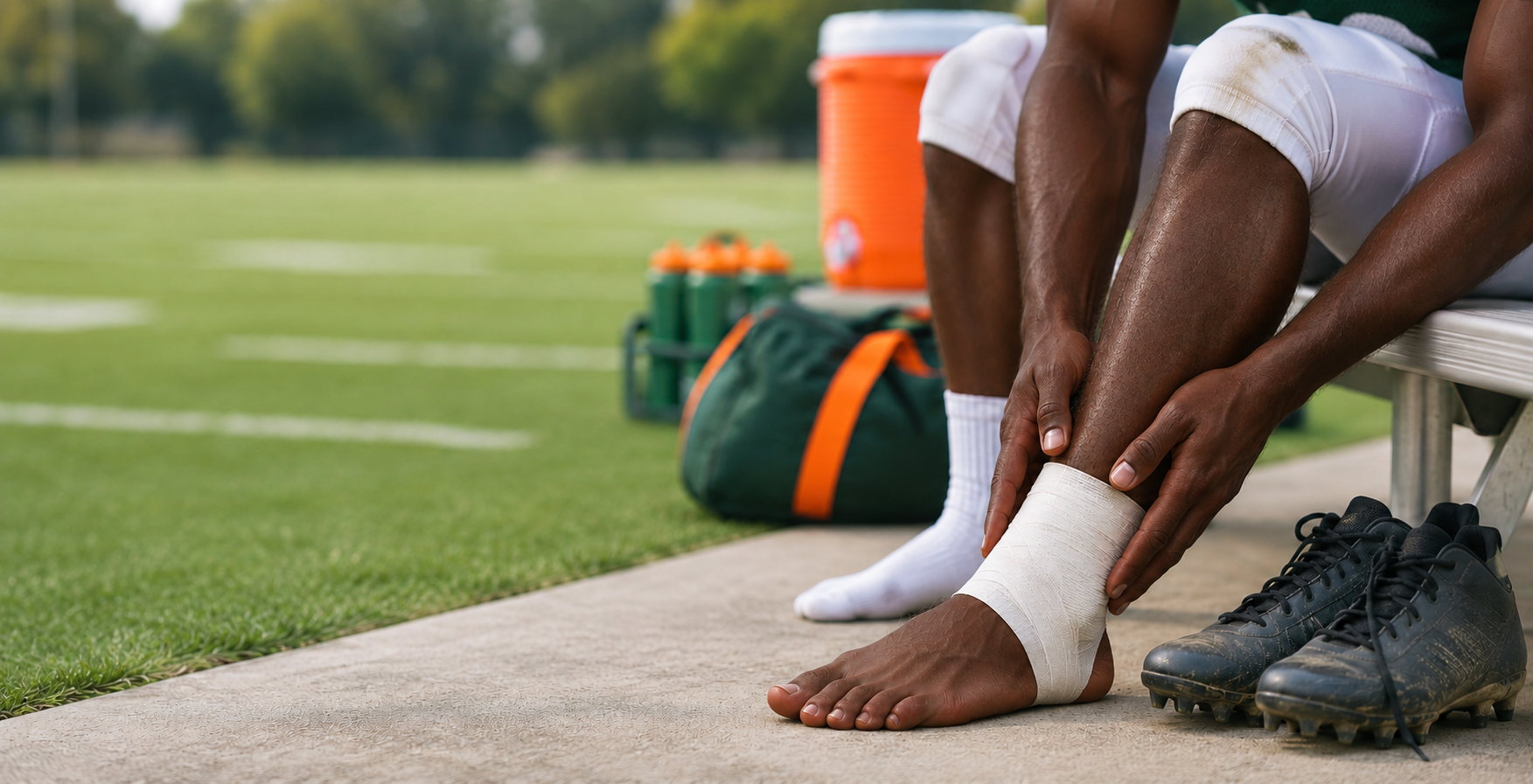


Dr. Kane explains high ankle sprains, treatment options, TightRope fixation, and why a careful comeback matters.
A Foot & Ankle Surgeon's perspective on high ankle sprains, treatment options, the TightRope procedure, and why getting the diagnosis right matters.
For Miami Hurricanes fans, news of an injury to wide receiver Malachi Toney is hard to hear. And if you know Dr. Stephanie Kane, you know there is no hiding where her football allegiance lies. She is a proud Canes fan!
Reports of Toney's high ankle sprain and planned surgery bring attention to an injury we see in foot and ankle medicine. It can be more complicated than a typical rolled ankle, take longer to heal, and sometimes require surgery to restore stability.
This article explains high ankle sprains in general. It does not diagnose Toney, confirm his surgical procedure, or predict his return to play.
A common lateral ankle sprain usually happens when the foot rolls inward, injuring ligaments on the outside of the ankle.
A high ankle sprain affects a different group of ligaments. Your lower leg has two bones: the tibia, or shinbone, and the fibula, the thinner bone on the outside. Just above the ankle joint, ligaments connect these bones and help keep the ankle aligned. This connection is called the syndesmosis.
When those ligaments are stretched or torn, the injury is called a high ankle sprain. If the damage makes the connection unstable, the tibia and fibula can separate abnormally.
A high ankle sprain often involves the foot twisting outward while it is planted, sometimes with the ankle bent upward toward the shin.
Imagine a football player planting a foot to change direction. Contact from another player twists the foot outward while the leg continues moving. That force can stress the ligaments between the tibia and fibula.
These injuries occur in football and other sports that involve cutting, pivoting, or sudden changes in direction. The ankle may not look very swollen, even when the ligament injury is significant.
A wide receiver needs to accelerate, plant, push off, jump, and make sharp cuts. Each movement depends on an ankle that can handle force while staying properly aligned.
Being able to walk comfortably does not mean an athlete is ready to sprint or compete. Returning before the ankle has healed and regained function can put recovery at risk.
As a Canes fan, Dr. Kane wants to see Toney back making plays. As a foot and ankle physician, her priority is a return that is guided by healing and function.
Possible signs of a high ankle sprain include:
Swelling and bruising do not tell the whole story. These symptoms can also occur with other injuries, so an examination is needed to establish the diagnosis. A clinician may use a squeeze test or other maneuvers as part of that examination.
Seek prompt care if you cannot bear weight or have severe or worsening pain after an injury. A visibly deformed ankle, an open wound, or a cold or numb foot needs urgent evaluation.
Your podiatrist or foot and ankle specialist will ask how the injury happened, examine the ankle, and assess tenderness and stability.
Depending on the findings, imaging may include:
The key question is whether the syndesmosis is stable or unstable. That distinction helps guide treatment.
No. Treatment depends on the injury and whether the ankle remains stable.
When the injured ligaments still maintain stability, treatment is usually nonsurgical. A plan may include a walking boot, crutches, temporary weight-bearing restrictions, swelling control, and gradual physical therapy.
Rehabilitation works toward restoring ankle motion, strength, balance, and the ability to tolerate everyday or athletic activity.
When the tibia and fibula separate abnormally, surgery may be recommended to restore alignment and stabilize the bones while the ligaments heal.
Persistent instability can contribute to ongoing pain, abnormal joint mechanics, and arthritis. An associated fracture can also affect the treatment plan.
One option for stabilizing an unstable syndesmosis is a suture-button device. TightRope is a brand of this type of fixation.
The surgeon restores the alignment of the tibia and fibula, then passes a strong suture through a small tunnel across the bones. Small buttons rest against the outer bone surfaces. The tightened suture helps maintain alignment while allowing a small amount of natural movement.
Syndesmotic screws are another established option. Screws provide rigid fixation and may sometimes loosen, break, or need removal. Removal is not required in every case. A fracture or more extensive injury may require a plate or additional fixation.
The goal is to restore alignment and stability. The best construct depends on the individual injury.
Research has found benefits with suture-button fixation in some patient groups. In one randomized trial with five-year follow-up, the suture-button group had better ankle function scores and less arthritis than the group treated with a single syndesmotic screw.
That finding does not make one implant the right choice for every patient. Injury patterns, fixation methods, and rehabilitation protocols differ. Suture-button devices also have risks, including irritation around the buttons, infection, loss of alignment, and possible additional surgery. Accurate alignment and surgical technique remain essential.
Recovery depends on ligament damage, ankle stability, any associated fracture, the treatment performed, and the patient's healing response. It may take weeks to months, with longer rehabilitation for some injuries.
After surgery, care generally progresses through phases:
These are general phases, not a schedule for Toney or any individual patient. Athletes need adequate strength, motion, balance, stability, and confidence before returning to play. Clearance should come from their treating team.
Not every ankle sprain is a simple injury. High ankle sprains deserve careful evaluation because an unstable injury can have lasting consequences if it is missed.
Whether you are a competitive athlete, a weekend basketball player, or someone who twisted an ankle stepping off a curb, persistent pain deserves attention.
Dr. Kane will be cheering for the Canes. The medical message stays the same: Get the diagnosis right. Follow the treatment plan. Complete rehabilitation. Give your comeback the time it needs.
Go Canes!
Signature Foot and Ankle helps patients in Boynton Beach, Loxahatchee, and surrounding communities evaluate foot and ankle concerns. Call 561-203-9285 or request an appointment online.
This article is for general education and does not replace an individualized evaluation or advice from a qualified healthcare professional.
For more background, see the Hospital for Special Surgery guide to high ankle sprains.


